Sewer Lining vs Pipe Bursting vs Dig and Replace
Last updated
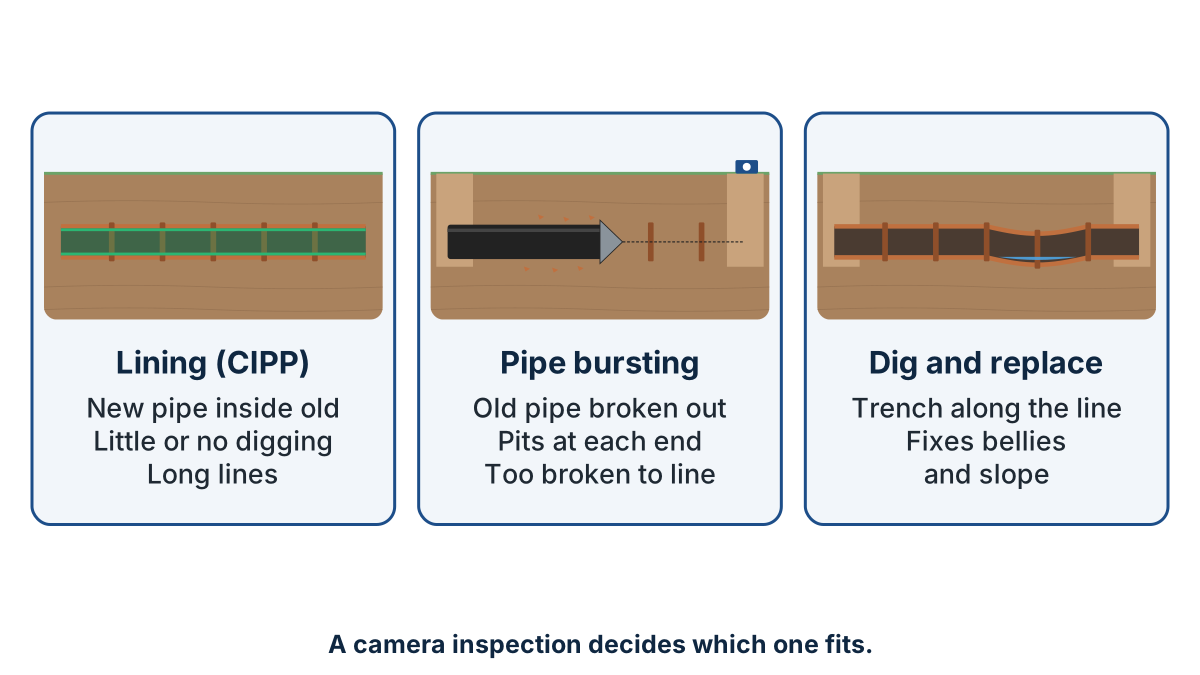
Lining puts a new pipe inside the old one and suits long lines that are still in the right position. Pipe bursting pulls a new pipe through the old path and suits pipes too broken to line, but can put a nearby water line at risk. Dig and replace is needed when the line has a belly or slope problem. A camera inspection decides which one fits.
Side by side
| Lining (CIPP) | Pipe bursting | Dig and replace | |
|---|---|---|---|
| How | Resin liner hardened inside the old pipe | New pipe pulled through as the old one is broken outward | Trench dug, old pipe removed, new pipe laid |
| Yard damage | Little or none | Small pits at each end | A trench along the line |
| Best for | Long lines (100+ ft), root intrusion, cracked joints | Pipe too broken to line, short lines | Bellies, sags, wrong slope, collapsed pipe |
| Limits | May not work on very short lines (about 15 ft or less) or lines with multiple connections | Can risk the water line, often a few inches away; can’t fix slope | Most disruptive |
| Edmonton season | Best in warmer months so the epoxy cures | Any time of year | Any time of year |
Lining
A resin-soaked liner is put into the old pipe, inflated, and hardened into a new, seamless pipe. No joints for roots to get through. It suits long lines of 100 feet or more but may not work for very short lines of about 15 feet or less, or lines with multiple connections. In Edmonton, it’s best done in warmer months so the epoxy cures properly. See sewer lining.
Pipe bursting
A bursting head breaks the old pipe outward while pulling a new pipe in behind it. It’s useful when the old pipe is too damaged to line. Two cautions: the water line often runs a few inches away and can be at risk, and pipe bursting can’t fix a line with a belly or slope problem. See pipe bursting.
Dig and replace
When the line sags or has the wrong slope, excavation is the fix. It’s the most disruptive, but it’s the only option that corrects the slope. See sewer line replacement.
How to choose
- Get a camera inspection.
- Look at the length, connections, condition and slope.
- Ask each company why they chose their method for your line.
Most Edmonton homes built before the early 1980s have clay tile sewers, so these choices come up often in older neighbourhoods.