Trenchless Sewer Lining (CIPP) in Edmonton
Often, yes. Lining puts a new pipe inside your old one with little or no digging. A camera inspection tells us if your line suits it.
- ✓ 24/7 emergency line
- ✓ Serving Edmonton and area
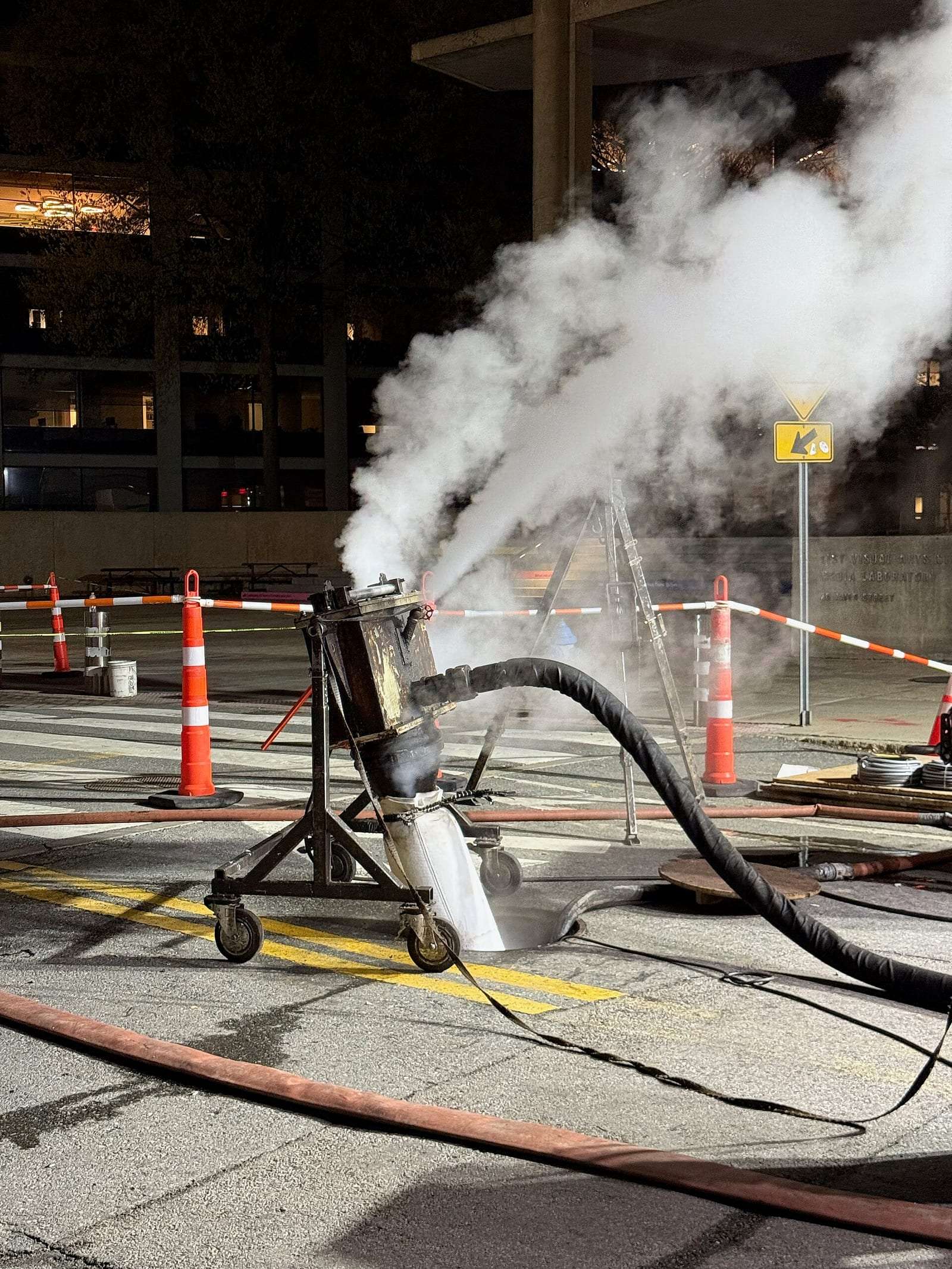
A cured-in-place liner being inflated and cured. · Photo: B637275, CC0 1.0

Signs you need this
- A camera inspection showed cracks, root intrusion or failing joints
- Repeat backups from roots in an old clay line
- You want to avoid digging up the lawn, driveway or landscaping
- The line is long, but still in its original position
How lining works, in plain words
Sewer lining builds a new pipe inside your old one. The technical name is cured-in-place pipe, or CIPP.
- We clean the old pipe of roots and buildup.
- A flexible tube soaked in resin is put into the pipe.
- The tube is inflated so it presses tight against the old pipe’s walls.
- The resin hardens. What’s left is a smooth, seamless pipe inside the old one, with no joints for roots to get through.
Because it goes in through the existing pipe, there’s little or no digging. Your lawn, driveway and trees stay where they are.
When lining works, and when it doesn’t
Lining is one of three options, and a camera inspection decides which fits your line.
Lining suits:
- long lines, 100 feet or more,
- old clay lines with cracks or root intrusion at the joints,
- lines still in their original position and slope.
Lining may not work for:
- very short lines, about 15 feet or less,
- lines with multiple connections,
- lines with a belly or slope problem. Those need excavation, because neither lining nor pipe bursting fixes the slope.
See sewer lining vs pipe bursting for how the options compare.
Edmonton’s season for lining
In Edmonton, lining is best done in warmer months so the epoxy cures properly. In winter, we focus on camera inspections and planning, and book lining for spring and summer.
Why it’s common in older Edmonton homes
Most Edmonton homes built before the early 1980s have clay tile sewers. Clay pipe comes in short sections with joints, and tree roots can grow in through them. A liner removes the joints.
Price
We quote lining after a camera inspection, and we itemize exactly what we’re quoting for: the length, the cleaning, reinstating connections and the final camera run. See sewer lining cost in Edmonton.
Our process
Camera inspection
Confirms lining suits your line, and finds connections, sags and length.
Clean the line
Roots and buildup are cleared so the liner can bond to a clean pipe.
Install the liner
A resin-soaked liner is pulled or inverted into the old pipe and inflated against its walls.
Cure and check
The resin hardens into a new pipe, and a final camera run confirms the result.
Questions people ask
How does sewer lining work?
A flexible liner soaked in resin is put inside your old pipe and inflated so it presses against the walls. When the resin hardens, you have a new, seamless pipe inside the old one.
Can every line be lined?
No. Lining suits long lines, 100 feet or more, but may not work for very short lines of about 15 feet or less, or lines with multiple connections. Lines with a belly or sag usually need excavation.
Can it be done in winter?
In Edmonton, lining is best done in warmer months so the epoxy cures properly. In winter, we can inspect and plan the job for spring.
How much does sewer lining cost in Edmonton?
It depends on the length, condition and access of your line, so we quote lining after a camera inspection. Quotes vary between companies, so compare exactly what each one includes.
Is it covered by insurance?
Repairs to service lines on your property aren't typically covered by a basic homeowner's policy.
Talk to us today
Call, or send a few details and photos and we will get back to you.